


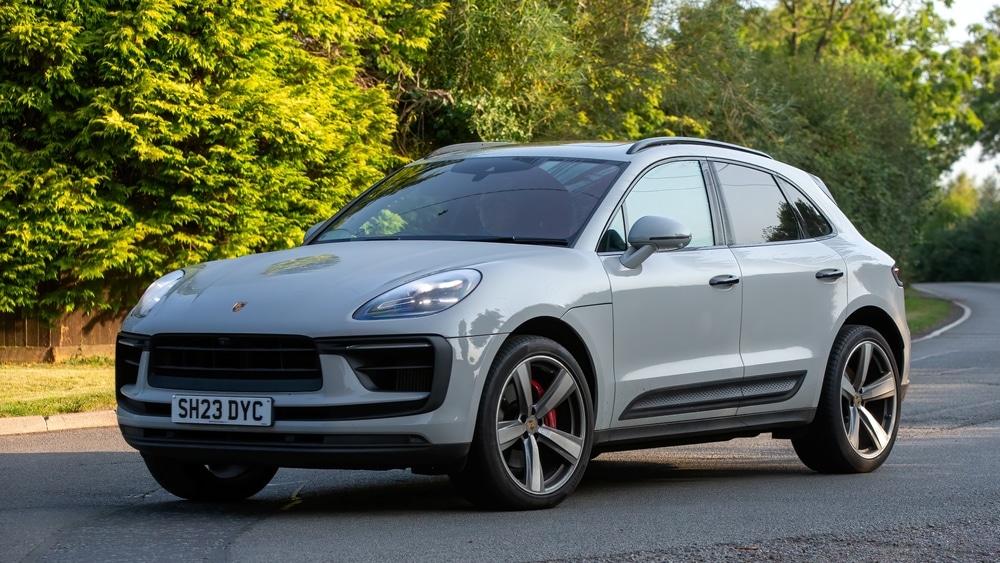
The automotive landscape is witnessing the end of an era as Porsche prepares to sunset the internal combustion engine (ICE) version of its most successful compact SUV. While the transition to electrification is a central pillar of the Stuttgart firm’s strategy, the phase-out of the traditional Macan is being managed with tactical precision. Porsche has confirmed that production for the ICE Macan will officially conclude in mid-2026, marking a significant pivot point for a model that has long been the brand’s volume driver.
The Sunset of the Combustion Macan
During a recent first-quarter earnings call, Porsche finance chief Jochen Breckner clarified the timeline for the model’s departure. Production is slated to continue through the middle of 2026, but the company is not simply cutting the cord. Porsche intends to maximize production leading up to that date, stockpiling as many units as current supplier capacity allows. This strategic surplus is designed to ensure that the ICE Macan remains available in showrooms well into 2027, providing a buffer as the market matures and moves toward the Macan Electric.
For enthusiasts in the UK, the news is relatively stable. Porsche GB has indicated that stock levels should remain sufficient to keep the combustion-powered Macan on sale locally throughout 2026 and likely into the early months of 2027. This staggered exit allows the brand to satisfy the lingering demand for petrol-powered performance while ramping up its electric infrastructure.
Strategic Distribution and the American Market
One of the most interesting facets of Porsche’s phase-out strategy is how it plans to allocate remaining inventory. The United States has emerged as a primary focus for the combustion-engined model. Despite the global push for EVs, American demand for the petrol Macan remains exceptionally high. This is partly fueled by a shift in the economic landscape: the removal of the $7,500 federal tax incentive for electric vehicles has created a noticeable headwind for the Macan Electric in the U.S. market.
By diverting a significant portion of the remaining ICE production to North America, Porsche is effectively hedging its bets. This move ensures that they do not lose market share in a region where buyers are currently more price-sensitive regarding EVs or simply prefer the traditional driving dynamics and convenience of a combustion powertrain.
Analyzing the Sales Performance
The numbers from the first quarter of 2026 tell a compelling story of brand resilience. The ICE Macan actually saw a year-on-year increase in sales, moving 10,130 units compared to 9,370 during the same period in the previous year. This growth highlights the “last call” phenomenon, where buyers rush to secure a proven platform before it disappears from the catalog.
While the Cayenne remains the undisputed leader in the Porsche stable with over 19,000 units sold, followed by the iconic 911, the Macan Electric’s performance of 8,079 units reflects the challenges of a transition period. This figure is a dip from the previous year’s initial launch surge, a trend that Porsche leadership attributes to the aforementioned loss of U.S. incentives and the natural stabilization that follows a high-profile product rollout.
Global Pressures and the Road to 2028
Beyond the transition to electric power, Porsche is navigating a complex geopolitical environment. Regional conflicts, specifically in the Middle East, have strained critical shipping lanes, impacting the global supply chain for parts and vehicle deliveries. This uncertainty has led to a slight hesitation among some luxury buyers, who are displaying a more cautious approach to new orders.
However, the story of the combustion-powered Macan doesn’t end with its production halt in 2026. Porsche is already laying the groundwork for a “spiritual successor” to the ICE Macan, currently targeted for a 2028 debut. While details remain sparse, this indicates that Porsche recognizes a segment of its audience may not be ready for a full EV transition and is looking for ways to bridge the gap with next-generation technology that captures the essence of the original petrol-powered SUV.
Conclusion: A Calculated Transition
Porsche’s decision to end ICE Macan production is not a sudden stop, but a carefully choreographed transition. By balancing production capacity, regional demand in the U.S., and the eventual arrival of a new successor in 2028, the company is attempting to maintain its financial momentum while leading its customers into an electrified future. For buyers wanting a new petrol-powered Macan, the window is closing, but thanks to Porsche’s stockpiling strategy, there is still a clear path to ownership for the next year and a half.