






When the Mini Countryman first debuted sixteen years ago, it was met with significant skepticism. As the brand’s inaugural five-door crossover, many purists viewed it as a departure from Mini’s core identity, predicting it would undermine the manufacturer’s reputation. Instead, the Countryman defied critics to become a staple of the lineup. Now in its third generation, the model has evolved to offer both traditional internal combustion engines and sophisticated fully electric drivetrains.
In a segment where many modern SUVs and crossovers have begun to look and feel indistinguishable, the Countryman remains an outlier. Testing the flagship all-electric SE ALL4 reveals that Mini has managed to preserve the spirited character that makes the brand unique, even if that personality comes with a few practical trade-offs.
Technical Specifications and Australian Market Overview
A Look at the Visual Design and Photography
The Australian market currently offers four distinct variants of the Countryman. The entry-point is the Countryman C, powered by a 1.5-liter turbocharged engine and starting at AU$56,700. For those looking to transition to electric power, the single-motor Countryman E starts at AU$75,526. Performance enthusiasts might look toward the JCW Countryman ALL4, a 2.0-liter turbo variant priced from AU$78,652.
However, the focus of our evaluation was the top-tier Countryman SE ALL4. This dual-motor electric flagship starts at AU$80,737, with our specific “Favoured” trim tester coming in at AU$83,862. Despite lacking the official John Cooper Works branding, the SE ALL4 delivers performance figures that rival high-performance hatchbacks.
Equipped with a 64.6 kWh battery pack, the dual-motor system generates a combined 230 kW (308 hp) and 494 Nm (365 lb-ft) of torque. While Mini claims a 0-100 km/h (62 mph) sprint of 5.6 seconds and a range of 432 km (268 miles), real-world testing suggests the car has some surprises up its sleeve.
Interior Innovation and Digital Experiences
While many automotive interiors have become sterile and overly clinical, the Countryman’s cabin feels like a breath of fresh air. Mini has successfully balanced its heritage with futuristic technology, creating an environment that feels both premium and genuinely entertaining.
The centerpiece is the industry-first circular OLED infotainment screen. It pays homage to the classic central speedometers of vintage Minis but updates the concept with stunning resolution and vibrant color reproduction. The software is highly interactive, featuring “Experience Modes” that alter the cabin’s visual atmosphere and soundscapes with playful graphics.
Ergonomics and Material Quality
The user interface manages to be intuitive despite moving most climate controls to the screen; essential shortcuts for temperature and seat heating remain easily accessible. While Apple CarPlay and Android Auto are supported wirelessly, they are currently confined to a rectangular box in the center of the round display rather than utilizing the full diameter.
The design team also prioritized tactile feedback. Below the screen, a row of physical toggles includes a satisfying twist-to-start switch that mimics a traditional key. The use of sustainable textiles across the dashboard—specifically a blue fabric—paired with vertical vents and multi-colored door cards, reinforces the car’s cheerful persona.

The Favoured trim adds several luxury touches, including a 12-speaker Harman Kardon sound system, a massaging driver’s seat, and a panoramic roof. A standout feature is the ambient lighting system, which uses small projectors to cast intricate patterns across the interior surfaces rather than relying on standard LED strips. Regarding utility, the 460-liter cargo space is competitive, though rear-seat legroom remains tight for taller adults, a common trait in the compact SUV segment.
Dynamic Performance and Real-World Speed

On the road, the SE ALL4 proves that electrification hasn’t dulled Mini’s edge. In our independent testing using a GPS timer, the Countryman consistently outperformed its official acceleration figures, hitting 100 km/h in just 5.3 seconds. The delivery of power is smooth and effortless, making it feel remarkably capable without being jarring for passengers.
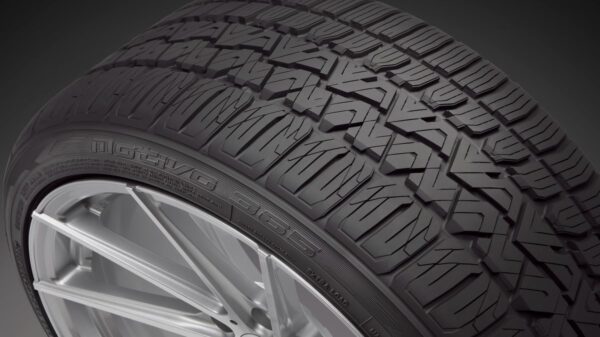
Overtaking performance is equally impressive. The 60-120 km/h (37-75 mph) sprint was completed in 4.79 seconds, placing it within striking distance of many lighter, dedicated hot hatches. The vehicle’s poise and grip, aided by Pirelli P Zero rubber, allow it to handle winding mountain passes with a level of enthusiasm rarely found in electric crossovers.
Efficiency, Range, and Charging Considerations
Efficiency during our week of testing averaged 17.2 kWh/100 km, a respectable figure given the vehicle’s aerodynamics and power. However, the relatively modest 64.6 kWh battery means that a real-world range of 400 km (248 miles) is difficult to achieve. For those without home charging, this may necessitate more frequent visits to public infrastructure.
Charging speed is another area where the Countryman faces stiff competition. With a maximum DC charging rate of 130 kW, a 10-80% charge takes approximately 29 minutes. While sufficient for many, it trails behind some rivals in the same price bracket.

The ride quality is typical for an electric SUV—firm and occasionally bouncy on uneven pavement. However, switching to “Go Kart Mode” sharpens the experience significantly by increasing steering weight, enhancing throttle response, and introducing a space-age synthetic engine note. For urban maneuvers, the active safety suite and an exceptionally precise self-parking system add a layer of modern convenience.
Summarizing the Electric Countryman Experience
The Mini Countryman SE ALL4 is a vehicle that prioritizes character and emotional appeal over raw technical specifications. While its charging speeds and absolute range may lag behind some specialized EV competitors, it compensates with an interior that is leagues more imaginative and a driving experience that remains true to the brand’s fun-to-drive heritage. It is a niche choice for buyers who want an SUV that reflects a sense of style and theater, proving that practical transport doesn’t have to be predictable.
Final Review Insights