













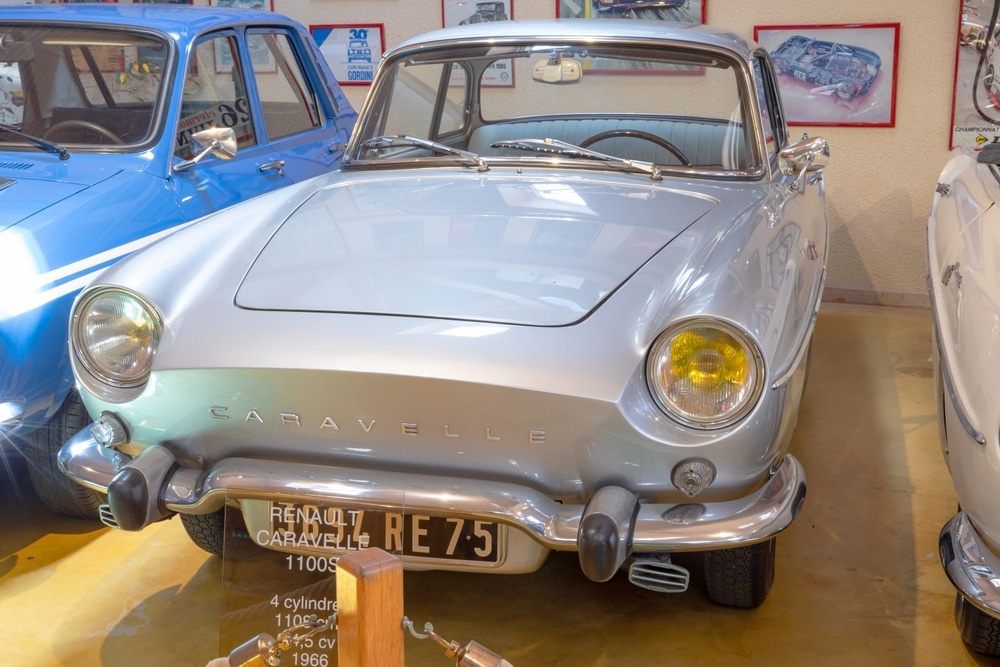
Restoring Authenticity: Moving Beyond “Bush Fixes”
Owning a classic car often involves a journey of discovery, specifically uncovering the questionable maintenance choices of previous owners. For Danny and his Renault Caravelle, the path to restoration required undoing several “bush fixes”—those makeshift, non-standard repairs that compromise a vehicle’s integrity. Under the care of specialists at Wimbledon Classic Cars, the Caravelle underwent a rigorous correction process. This included replacing incorrect braking components and addressing areas where parts had been welded together inappropriately. The goal was simple but demanding: return the vehicle to its factory-fresh state, ensuring that the mechanical soul of the car matched its pristine exterior.
The Mechanical Conundrum: When Simple Fixes Require Engine Removal
Classic car ownership is frequently a game of patience and tactical planning, especially when dealing with the unique packaging of rear-engined French classics. Danny’s Caravelle currently faces a common vintage car dilemma where minor component failures require major labor. The speedometer and odometer have been dormant for several months, and the fuel gauge has followed suit.
Because of the Caravelle’s layout, accessing these components is no small feat. The fuel tank is nestled behind the engine, and the speedometer cable interface is equally buried. To fix either, the entire engine must be dropped. In a display of pragmatic classic car ownership, Danny is waiting for a third mechanical motivation before pulling the power unit. It is a calculated strategy: in the world of vintage restoration, consolidating “engine-out” jobs is often the only way to keep maintenance costs from spiraling out of control.
Evolution of the Caravelle Powertrain
The Renault Caravelle saw several iterative updates during its production run, primarily aimed at addressing its reputation for being somewhat lethargic. Danny’s model features the 1108cc engine, a unit introduced in 1964 as a significant upgrade over the original 845cc and the subsequent 956cc engines.
Despite being the “high-performance” option of its era, the 1108cc engine produces a modest 55hp. While that figure may seem infinitesimal by modern standards, it represents the peak of the model’s factory development. Driving a car with such limited output requires a shift in mindset; it isn’t about raw acceleration, but rather about momentum and making the most of the engine’s narrow power band.
Rear-Engined Dynamics and Aesthetic Appeal
What the Caravelle lacks in straight-line speed, it compensates for with a distinct driving character. The rear-engine, rear-wheel-drive (RR) configuration provides a unique weight distribution that comes alive on winding roads. Even if steep inclines like Wimbledon Hill pose a challenge for the 55hp unit, the car’s agility on the flats and through corners offers a tactile experience that modern, over-assisted vehicles cannot replicate.
Ultimately, however, the Caravelle is a triumph of design. For many enthusiasts, the mechanical quirks are a secondary concern compared to the car’s elegant lines. This particular example is further elevated by its color-matched metal hardtop. In a soft cream finish, the hardtop transforms the silhouette, giving the Caravelle a sophisticated, grand-touring aesthetic that remains its most enduring legacy.
Summary of the Classic Experience
Restoring and maintaining a Renault Caravelle is a labor of love that balances the frustrations of complex French engineering with the undeniable charm of 1960s style. While the requirement to pull the engine for minor gauge repairs highlights the car’s idiosyncratic design, the reward is a factory-correct icon that captures the essence of a bygone era of motoring. For Danny, the Caravelle isn’t just a machine; it is a moving piece of art that prioritizes the joy of the journey over the speed of the arrival.