





Until recently, the Chery nameplate was largely unknown to automotive consumers outside its domestic Chinese market. That has changed rapidly. Through aggressive global expansion, the manufacturer has introduced a diverse lineup of vehicles spanning various segments and propulsion types. Among its most intriguing ventures is the launch of Jaecoo, a lifestyle-oriented brand established in 2023.
Positioned as a more rugged sibling to the Omoda brand, Jaecoo is specifically tailored for international markets. This strategy is already yielding results; in regions like the UK, the brand’s larger J7 model has gained significant traction. Often nicknamed the “Temu Range Rover” due to its uncanny resemblance to the Range Rover Evoque, the J7 has paved the way for the smaller, more accessible model: the J5 EV.
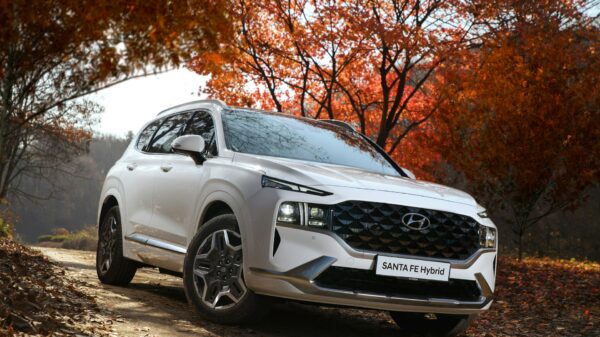
The 2026 Jaecoo J5 EV continues this design philosophy, drawing heavy inspiration from Land Rover’s aesthetic, particularly in its silhouette and rear styling. While the vehicle boasts a level of fit and finish that belies the brand’s relative youth, it faces stiff competition. In a crowded segment of compact electric SUVs, a polished exterior can only go so far if the underlying mechanical and software traits fall short of expectations.
Essential Specifications and Performance Data
Visual Gallery: The Jaecoo J5 EV Exterior Design
In the Australian market, the J5 is offered in both internal combustion and fully electric variants. The petrol version enters the market at an aggressive AU$25,990, but the EV variant we tested remains a strong value proposition at AU$36,990 drive-away. This makes it one of the most affordable electric vehicles in the country, undercut in the SUV category only by the BYD Atto 2.
Despite the entry-level price, the J5 EV isn’t short on power. Its single electric motor delivers 150 kW and 288 Nm of torque, placing it in direct competition with more expensive rivals like the Hyundai Kona Electric and Kia EV5. The standard equipment list is equally generous, featuring a full-length glass roof with an electric blind, an eight-speaker sound system, and a comprehensive suite of safety tech including 360-degree cameras and adaptive cruise control.
Interior Quality and Cabin Ergonomics
Step inside, and the J5 EV immediately feels more premium than its price tag suggests. Chery has utilized soft-touch synthetic leathers—in our case, a two-tone cream and grey palette—that elevate the cabin atmosphere above many legacy competitors. The build quality appears robust, successfully mimicking a luxury environment.
The dashboard layout is modern, featuring a slim 8.9-inch digital gauge cluster for the driver. Diverging from the industry trend of landscape tablets, the J5 utilizes a portrait-oriented infotainment screen that flows into the center console, reminiscent of the Mercedes-Benz S-Class. However, the screen’s steep angle makes it prone to significant glare in direct sunlight.
Software functionality is where the experience begins to fray. While wireless smartphone integration is included, the user interface forces drivers to exit Apple CarPlay or Android Auto just to adjust basic climate settings like fan speed or temperature. This lack of a persistent climate bar is a notable ergonomic oversight. Additionally, the native software feels sparse, offering few proprietary apps to fill the large screen real estate.
Practicality and Storage Solutions
Practicality is a high point for the J5 EV. The interior offers ample storage, including a floating center console with a large lower tray and a deep central bin. The seating position is comfortable and provides the “commanding” view that SUV buyers typically seek.
Rear passengers benefit from a flat floor and generous headroom, making it a viable family hauler. Cargo space is rated at a healthy 480 liters, and the inclusion of a hidden sub-floor compartment provides a tidy solution for storing charging cables. During our testing, which included a household move, the J5 proved to be a surprisingly capable cargo carrier.
Real-World Driving Impressions and Dynamics
On the road, the J5 EV offers the smooth, quiet acceleration characteristic of electric vehicles. A 0-100 km/h sprint of roughly 7.7 seconds provides enough punch for urban navigating and highway merging. However, because the power is sent exclusively to the front wheels, the car is prone to torque steer under heavy acceleration. While present, it is less jarring than in some other front-wheel-drive EVs in this class.
The primary frustration during driving is the regenerative braking system. Though it offers three levels of adjustment, the calibration feels unfinished. In its highest setting, the system fails to allow for smooth modulation; the moment you apply even a fraction of throttle to balance your speed, the regeneration cuts out abruptly, causing the car to jolt. This makes “one-pedal” style driving nearly impossible and forces most drivers to stick to the lowest setting for a smoother ride.
Steering feel is notably light, which aids in low-speed maneuvers but lacks the feedback desired for spirited driving. On a more positive note, the suspension tuning is well-sorted for daily commutes, absorbing road imperfections with composure and maintaining a stable feel over uneven surfaces.
Battery Range, Efficiency, and Charging Speeds
The J5 EV utilizes a 58.9 kWh lithium-iron phosphate (LFP) battery. Jaecoo claims a combined efficiency of 14.3 kWh/100 km, leading to a range of approximately 402 km (250 miles). In our real-world testing, we recorded an average of 15.2 kWh/100 km. This discrepancy is likely due to a heavy highway driving cycle and our decision to disable the aggressive, jerky regenerative braking.
Charging performance is adequate for the price point. The vehicle supports 10.3 kW AC charging and up to 130 kW on a DC fast charger. In a typical charging session, we added 16.55 kWh in 14 minutes, proving that the J5 EV can handle mid-trip top-ups reasonably well, even if it doesn’t set new records for charging speed.
Summary: A Promising Contender with Software Hurdles
The 2026 Jaecoo J5 EV is an impressive value-for-money proposition that brings high-end aesthetics to the budget-conscious EV market. It shines with its interior material quality, competitive range, and comfortable ride. However, it is held back by unrefined software ergonomics and a poorly calibrated regenerative braking system that hampers the driving experience. For buyers prioritizing style and cost, it remains a solid choice, but those seeking a more polished driving interface may find it lacking until over-the-air updates address its current software and calibration quirks.