





When the latest generation of the Honda CR-V Hybrid first arrived in Australia in 2024, the range was led by a single high-spec variant: the front-wheel-drive e-HEV RS. While it was a polished SUV, it lacked a critical feature for many buyers in this segment—all-wheel drive. For the 2026 model year, the landscape has changed. Electrification now dominates the CR-V lineup, and the hybrid flagship finally delivers power to all four wheels.
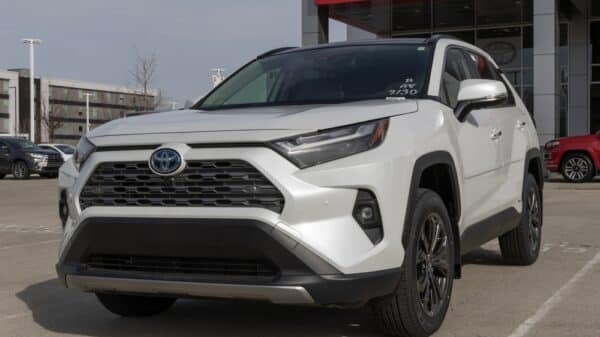
This update is a significant move for Honda. The CR-V’s primary competitors, the Toyota RAV4 and the Mazda CX-5, have long offered all-wheel-drive configurations. While Mazda has yet to introduce a hybrid CX-5, the RAV4 Hybrid AWD has become a dominant force in the market. Arriving a few years after its main rival, the CR-V Hybrid AWD aims to reclaim ground in a highly contested space.
TECHNICAL SPECIFICATIONS
To see how the 2026 CR-V stacks up against newer rivals, we spent a week testing the Australian flagship, the CR-V e:HEV RS AWD, in various driving conditions.
The Shift to Electrified Performance
During our previous assessment of the CR-V in late 2024, the focus was on the 1.5-liter turbocharged four-cylinder engine. At that time, it was the primary choice for most Australian buyers. Today, that internal combustion engine is limited to only two trims—the VTi X and VTi L7. The rest of the four available variants have transitioned to the hybrid powertrain.
This e:HEV system utilizes a 2.0-liter naturally aspirated petrol engine paired with two electric motors and an eCVT. In the Australian market, this setup produces 135 kW (181 hp) and 335 Nm of torque. Interestingly, international markets often cite a higher combined output of 152 kW (204 hp), similar to the Honda Accord. While the base turbo models offer a slight horsepower advantage (140 kW), they fall short on torque, providing only 240 Nm compared to the hybrid’s much punchier delivery.
In terms of pricing, the Australian CR-V range begins at AU$44,900 for the base VTi X. The hybrid journey starts with the e:HEV LX at AU$49,900, moving through the e:HEV L and VTi L7, eventually reaching the AU$64,400 flagship e:HEV RS. In the North American market, the CR-V range is positioned between $30,920 and $42,550 for the Sport Touring Hybrid.
Interior Comfort and Ergonomics
The 2026 model year doesn’t introduce major changes to the CR-V’s cabin architecture. While it lacks the massive, ultra-wide screens found in the latest RAV4 or the premium minimalism of the CX-5, the interior remains a highly functional and well-constructed environment.
Interior Design and Infotainment Visuals
The centerpiece of the dashboard is a 9.0-inch touchscreen equipped with wireless Apple CarPlay and Android Auto. While the hardware is reliable, the software graphics and user interface feel a generation behind some competitors. It lacks the modern visual flair found in the newest SUV entries, though it remains easy to navigate.
One distinct feature of the e:HEV models is the push-button gear selector, which replaces the traditional lever found in the turbocharged versions. While these buttons free up visual space and look modern—much like those in the new Civic Hybrid—they can occasionally feel less intuitive during quick maneuvers like three-point turns.
Cabin Quality and Passenger Amenities
The rest of the interior follows Honda’s current design language, featuring the signature honeycomb mesh across the dashboard vents. A major plus is the retention of physical dials and buttons for climate control, which are far safer and easier to use while driving than screen-integrated menus. The materials throughout the cabin feel high-quality, though the overall aesthetic leans toward conservative rather than cutting-edge.
In terms of luxury features, the RS variant stands out with a panoramic sunroof (shared only with the VTi L7), a head-up display, and sporty alloy pedals. It also includes an exclusive black headliner and a premium 12-speaker Bose audio system, providing an excellent acoustic experience.
Space remains a primary reason to choose the CR-V. Unlike many SUVs that sacrifice utility for a “coupe-like” roofline, the CR-V’s boxy shape provides excellent headroom for rear passengers. The cargo area is equally generous, offering 581 liters of space with the seats up and expanding to ,636 liters with the rear bench folded flat.
Refined Driving Dynamics and Efficiency
The current CR-V doesn’t aim to reinvent the SUV segment, but rather to perfect the existing formula. The addition of all-wheel drive to the hybrid system significantly enhances its versatility and driving composure.
Honda’s e:HEV “intelligent hybrid” system functions as both a series and parallel hybrid. At lower city speeds, the 2.0-liter engine acts primarily as a generator to power the electric motors. At highway speeds, a clutch allows the engine to drive the wheels directly for maximum efficiency. This transition is nearly imperceptible and ensures the vehicle feels responsive in most situations.
Exterior Styling and Road Presence
Efficiency is where the CR-V truly shines. While Honda claims an average of 5.7 L/100 km for the RS AWD, our real-world testing yielded an even better 5.5 L/100 km across a mix of urban and highway driving. This matches the efficiency of the lighter front-wheel-drive hybrid models.
The inclusion of AWD also fixes a minor gripe with the FWD hybrids: the tendency for front-wheel spin under heavy acceleration due to the electric motor’s instant torque. The AWD system provides a much more planted and confident feel when pulling away from intersections.
The powertrain is generally quiet, though the engine can become audible under heavy load as the eCVT holds higher revs to generate power. While the transmission isn’t a traditional CVT—it uses a single fixed gear ratio—Honda has programmed “steps” into the power delivery to mimic a conventional automatic, which makes it feel more natural to those used to petrol-only vehicles.
Chassis Performance and Suspension Tuning
One of the most impressive aspects of the CR-V e:HEV RS is its handling. Despite being the heaviest in the lineup at 1,828 kg, the combination of MacPherson struts up front and a multi-link rear setup keeps the SUV remarkably stable. The dual-pinion adaptive steering is precise, making the CR-V feel more agile than its size suggests.
The suspension is tuned for control rather than pillowy softness. While it isn’t uncomfortable, it is firm enough to remind you of the road surface. This trade-off results in less body roll in corners and a more European-feeling driving experience, though buyers seeking a purely “floaty” ride should test it on rougher roads first.
Final Thoughts on the 2026 CR-V Hybrid
The 2026 Honda CR-V e:HEV RS AWD is a well-executed evolution of a trusted nameplate. While it may not have the largest screens or the flashiest tech in its class, it offers a level of refinement, practicality, and fuel efficiency that is hard to ignore. In Australia, it is supported by a strong five-year warranty and affordable AU$199 annual servicing for the first five years, making it a low-stress, high-value choice for families who want a dependable hybrid SUV with the added security of all-wheel drive.