
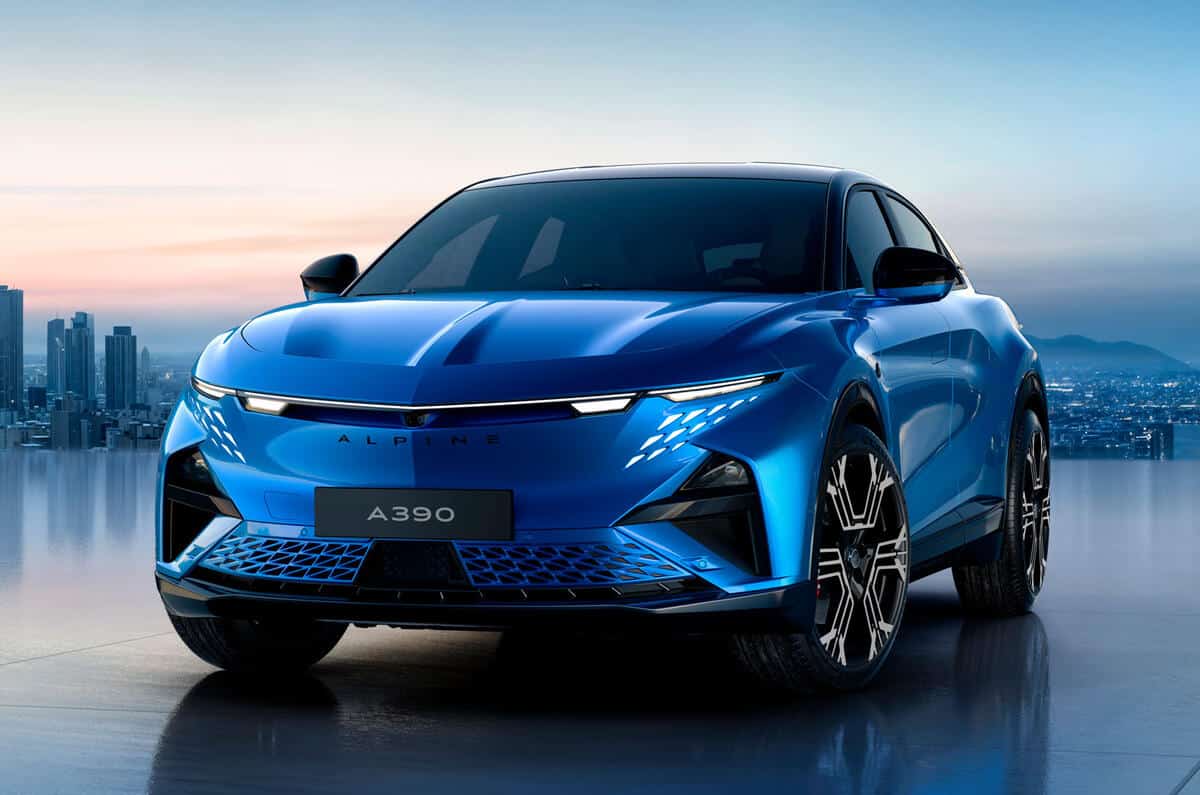
Managing the significant mass of the Alpine A390 proves to be a challenge for its chassis. The vehicle exhibits a certain stiffness in its vertical and lateral body control, which prevents it from achieving the fluid, effortless composure over the wheels that enthusiasts have come to expect from the Alpine brand. At higher speeds, the car’s bulk remains apparent, lacking the “breathing” quality found in more lightweight sports cars.
Agility is bolstered by a quick-ratio steering system and a wheelbase that is relatively short for this segment. These factors allow the A390 to attack tight corners with a surprising amount of eagerness. There is no shortage of front-end grip or turn-in response, regardless of the tire specification chosen. However, the steering itself is tuned to be very light and can feel somewhat disconnected or “glassy” as you approach the limits of grip. This sensitivity around the straight-ahead position can feel nervous to some, though others may appreciate the immediate response. For a more precise experience, the 21-inch Michelin Pilot Sport 4S tire option is the superior choice, as it provides more weight to the steering and helps the driver place the car with greater accuracy.
Once past the initial turn-in phase, the A390 reveals a chassis balance that leans toward the conservative. Despite the presence of advanced torque vectoring, the system seems limited in its ability to rotate the car through the apex under power, resulting in a driving experience that feels more stable than playful.
Performance Appraisal: On-Track Handling and Control
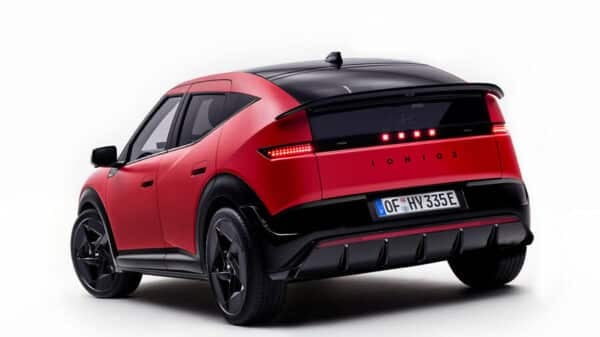
Taking the A390 to technical handling circuits—testing the GT at Horiba MIRA and the GTS at Circuito di Vairano—reveals a car that is competent but struggles to match the benchmark set by rivals like the Hyundai Ioniq 5 N. In terms of pure body control, the Alpine performs well, managing roll and pitch with consistency. The Michelin Pilot Sport tires are a highlight, offering strong lateral grip and resisting the heat cycles of track use without falling off in performance. While the brake pedal feel is somewhat soft with a long travel—not ideal for a performance-focused EV—the actual braking force is sufficient and the system shows good resistance to fade.
On the track, the higher cornering loads help translate more feedback through the steering wheel than is felt on the road. The open space also allows drivers to experiment more with weight transfer. The A390 is particularly receptive to trailbraking, which can be used to stabilize the car on entry and facilitate a neutral-steer exit under acceleration. However, the driving style required is more akin to traditional four-wheel-drive systems than modern, fully variable setups.
The primary disconnect occurs when the driver tries to push the car into a slide. The A390’s electronic control unit is programmed to prioritize safety; as soon as it detects opposite lock, it shifts power away from the outer rear wheel and toward the front motor to pull the car straight. This creates a scenario where the driver is fighting the car’s software rather than working with physics, a stark contrast to the natural and intuitive feedback of the Alpine A110. Alpine engineers confirm this is a deliberate calibration intended to make the car feel light and stable on slippery or uneven surfaces rather than a drift-focused machine. While this focus on stability is practical, it lacks the driver involvement that a more adjustable system—like the one found in the Ioniq 5 N—provides.
Final Thoughts: The Alpine A390 is a highly capable and stable performance EV, offering impressive grip and body control. However, its heavy electronic intervention and conservative torque vectoring prioritize safety and stability over the raw, intuitive agility that defines the Alpine brand. While it excels as a composed high-speed cruiser, it lacks the hooligan spirit and driver-centric feedback found in the segment’s top-tier enthusiast models.